


Mastering how to grow Arnica is an inspiring horticultural endeavour for any UK gardener wishing to cultivate this iconic alpine perennial, support wildlife, and contribute to botanical conservation.
Known botanically as Arnica montana (commonly called Mountain Arnica or Mountain Tobacco), this striking member of the daisy family produces radiant golden-yellow blossoms above low-growing rosettes of aromatic foliage. While renowned worldwide for its traditional therapeutic associations, learning how to grow Arnica in British gardens requires an understanding of its unique alpine origin. Unlike common garden herbs, Arnica demands specific conditions: lime-free acidic soil, excellent drainage, and cold seed stratification. In this comprehensive cultivation guide, we examine the biology, step-by-step seed sowing method, ongoing plant care, troubleshooting advice, and crucial safety rules for UK gardeners.
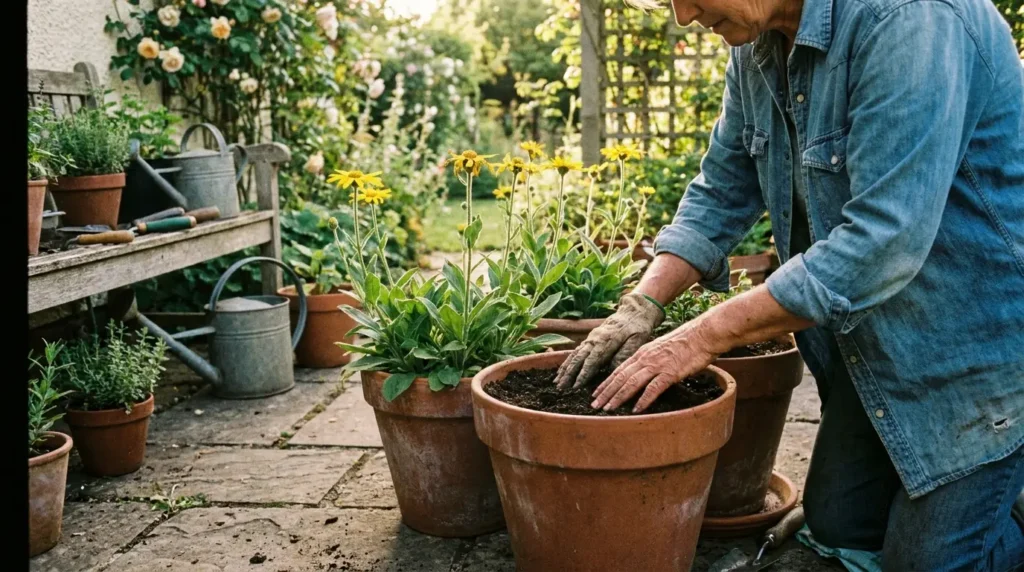
Table of Contents
- What Is Arnica montana? Botanical Overview & Natural Habitat
- Essential Growing Conditions: How to Grow Arnica in the UK
- What Soil and Sunlight Does Arnica Need?
- 7 Essential Steps: How to Grow Arnica from Seed
- Watering, Soil Moisture, and Plant Care
- How to Propagate Arnica and When Does It Flower?
- Pruning, Deadheading, and Winter Care
- Troubleshooting Common Arnica Growing Problems
- Can You Grow Arnica in Pots and Containers?
- Critical Safety: Handling Precautions and Toxicity Warnings
- Botanical Conservation, Classical Homeopathy, and Arnica
- Frequently Asked Questions: How to Grow Arnica
- Final Thoughts on How to Grow Arnica
- Book a Holistic Health Consultation in Derbyshire or Online
What Is Arnica montana? Botanical Overview & Natural Habitat
Botanical Summary: Arnica montana is an herbaceous alpine perennial belonging to the Asteraceae (daisy/compositae) family. Indigenous to the nutrient-poor, acidic upland grasslands, subalpine pastures, and mountain heaths of Central and Southern Europe, it forms a basal rosette of soft, glandular-hairy oval leaves and produces solitary or clustered golden flower heads during summer.
The Royal Horticultural Society (RHS) rates Arnica montana with a hardiness rating of H6, confirming that it is fully cold-hardy across the entire UK down to temperatures between -15°C and -20°C. Despite this exceptional frost resistance, learning how to grow Arnica successfully can challenge even experienced gardeners because the plant has evolved to thrive exclusively in impoverished, acidic upland soils.
In the wild, Arnica grows alongside heather, bilberries, and mat-grass across elevations ranging from 500 to nearly 3,000 metres. Because wild European colonies have declined sharply due to habitat loss and intensive agricultural liming, cultivating Arnica from reputable cultivated seeds in home gardens provides a vital sanctuary for pollinating bees while preserving the genetic presence of this extraordinary mountain flora.
Essential Growing Conditions: How to Grow Arnica in the UK
Recreating the mountain environment is the key secret to understanding how to grow Arnica. In lowland UK gardens, rich garden loam and high-nutrient fertilisers will quickly cause root rot or weak, floppy growth.
The core environmental requirements for growing healthy plants are summarised in the reference table below:
| Growing Factor | Ideal Requirement | Horticultural Notes |
|---|---|---|
| Sunlight / Exposure | Full sun (minimum 6 hours daily) | Will tolerate partial afternoon shade in southern UK gardens; full sun essential in northern regions. |
| Soil Acidity (pH) | Acidic to slightly neutral (pH 5.0 – 6.5) | Strictly lime-free (calcifuge). Will suffer chlorosis and fail in alkaline or chalky soils. |
| Soil Texture & Drainage | Gritty, humus-rich, free-draining | Requires consistent drainage to prevent winter crown rot; incorporate horticultural grit. |
| Soil Fertility | Low to moderate (nutrient-poor) | Avoid high-nitrogen fertilisers, animal manures, and rich composts. |
| RHS Hardiness Rating | RHS H6 (-15°C to -20°C) | Fully frost hardy throughout the UK; survives winter snow and sub-zero temperatures. |
| Mature Height & Spread | Height: 20–50 cm | Spread: 25–35 cm | Forms neat ground-hugging leaf rosettes with upright flowering stems. |
What Soil and Sunlight Does Arnica Need?
The single greatest obstacle gardeners face when exploring how to grow Arnica is soil chemistry. Arnica montana is a confirmed calcifuge—meaning it cannot tolerate free calcium carbonate or alkaline lime. If your garden sits on chalk or heavy limestone bedrock, planting Arnica directly into native borders will lead to severe iron lock-out, stunted rosettes, and eventual plant loss.
To provide the ideal soil foundation:
- Test Your Soil pH: Ensure soil registers between 5.0 and 6.5 using a simple garden test kit.
- Blend with Ericaceous Mix: If planting in mixed borders, incorporate generous amounts of peat-free ericaceous compost combined with washed horticultural grit or perlite.
- Position in Bright Alpine Light: Place plants in an open, unshaded site with good air movement. Avoid planting beneath dense tree canopies or heavy shrub borders where falling autumn leaves can smother the delicate winter rosettes.
7 Essential Steps: How to Grow Arnica from Seed
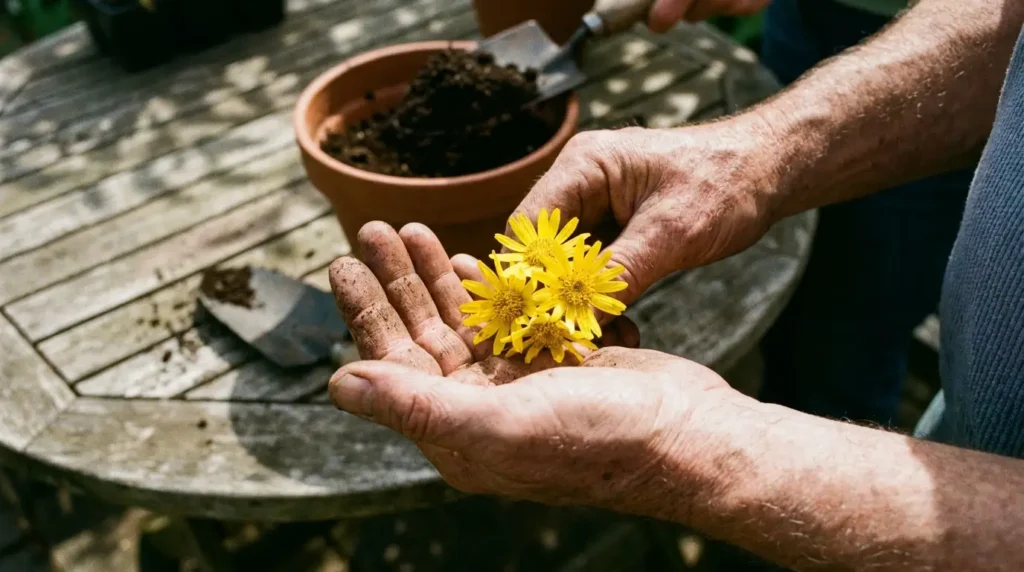
Starting from seed is the most reliable and affordable way to establish healthy colonies. Follow these seven proven steps to master how to grow Arnica from seed with high germination success:
Step 1: Cold Stratification (Overcoming Seed Dormancy)
In its native alpine habitat, Arnica seeds fall in late summer and rest under cold mountain snow before germinating in spring. As a result, the seeds possess an internal chemical dormancy. To replicate this natural cold cycle:
- Mix the seeds with a handful of damp (not soaking) horticultural sand or place between moist paper towels in a sealed plastic bag.
- Refrigerate the seeds at 2°C to 4°C for 4 to 6 weeks before sowing.
- Alternatively, sow seed trays outdoors in late autumn (October or November) and allow natural UK winter cold to stratify them naturally.
Step 2: Prepare an Acidic Germination Substrate
Standard multi-purpose composts are often too rich or slightly alkaline for alpine seedlings. Prepare a custom seed compost by blending 60% peat-free ericaceous seed compost with 40% fine horticultural sand or perlite. Ensure the seed trays have ample bottom drainage holes to prevent standing water.
Step 3: Surface Sow for Light-Dependent Germination
A critical rule in how to grow Arnica from seed is that the seeds are light-dependent germinators. Never bury them beneath thick layers of compost. Scatter the stratified seeds thinly across the surface and gently press them down into the damp soil so they make firm contact. At most, sift a paper-thin dusting of fine vermiculite over the tray to hold moisture while permitting light to penetrate.
Step 4: Temperature and Moisture Regulation
Place the seed tray in a bright, unheated greenhouse or on an indoor windowsill receiving bright indirect light at 15°C to 20°C. Cover the tray with a clear propagator lid to maintain high humidity. Water exclusively with a fine hand-mister spray using rainwater or filtered water rather than tap water, which often contains alkaline limescale. Germination typically begins within 14 to 28 days.
Step 5: Pricking Out and Potting On
When the seedlings develop their first true set of hairy leaves, prick them out carefully by holding the leaves (never the fragile stems). Transfer individual seedlings into 9cm pots filled with an acidic potting mix (ericaceous loam and grit). Keep the young plants in cool, bright conditions with steady ventilation to prevent damping off.
Step 6: Hardening Off Young Plants
Before planting out into garden borders, acclimatise young Arnica rosettes over 7 to 14 days. Place the pots outside in a sheltered position during the daytime, returning them to a cold frame or porch overnight. This process hardens their epidermal cell walls, preparing them for wind and temperature fluctuations.
Step 7: Final Garden Planting Out
Plant out in late spring (April or May) or early autumn (September). Dig planting holes slightly larger than the root ball, ensuring the basal rosette sits flush with the soil surface—burying the crown leads to rot. Space individual plants 25 to 30 cm apart to allow their clumping rosettes to expand naturally.
Watering, Soil Moisture, and Plant Care
Once established in your garden, caring for Arnica involves balancing moisture without ever waterlogging the root system:
- Watering Protocol: Keep the soil consistently moist during the first spring and summer after planting. Once established, Arnica exhibits moderate drought tolerance, but benefits from watering during prolonged dry spells. Use rainwater collected in a water butt whenever possible, as hard tap water can gradually elevate soil pH over time.
- Fertiliser Directives: Do not use high-nitrogen liquid feeds or slow-release chemical pellets. In mountain pastures, Arnica thrives on lean soils. Over-feeding causes excessive, floppy foliage and reduces flower production. An annual light mulch of well-rotted leaf mould or pine needle compost in early spring provides all the nutrients required while naturally preserving soil acidity.
- Weeding with Care: Arnica produces relatively shallow root systems and creeping rhizomes. Hand-weed around the leaf rosettes carefully rather than using sharp hoes, which can slice through developing underground stems.
How to Propagate Arnica and When Does It Flower?
Arnica blooms across the UK during the peak summer months, typically from June through August. Mature plants send up wiry stems carrying one to three golden flower heads with slightly dishevelled, daisy-like petals that provide a magnet for native bees, hoverflies, and butterflies.
Propagating by Clump Division
In addition to growing from seed, mature Arnica clumps can be propagated by division every 3 to 4 years. The optimal times for division are early spring (just as new growth emerges in March) or early autumn (September):
- Gently lift an established clump using a hand fork, taking care to preserve the fine root network.
- Tease the rhizomatous crowns apart, ensuring each divided section retains at least one healthy leaf rosette and substantial roots.
- Replant divisions immediately into freshly prepared acidic soil, watering thoroughly to settle root contact.
Pruning, Deadheading, and Winter Care
Routine maintenance for Arnica montana is simple and rewarding:
- Deadheading: As flowers fade in mid-to-late summer, snip spent flower stalks back to the basal rosette with clean snips. This redirects the plant’s energy into root strengthening and crown expansion. If you wish to collect seed, leave several mature flower heads to dry on the plant until the downy pappus (seed tufts) turn tan.
- Autumn Die-Back: In late autumn, flowering stems wither naturally, leaving the compact evergreen or semi-evergreen rosette hugging the ground. Clear away wet, decomposing leaves from neighbouring trees to ensure the crown remains dry and exposed to light.
- Winter Hardiness: Because of its RHS H6 rating, Arnica requires no fleece or artificial heating in UK winters. However, in regions with very heavy winter rainfall, ensure surrounding soil has sufficient grit to prevent water pooling around dormant crowns.
Troubleshooting Common Arnica Growing Problems
Even when following best practices on how to grow Arnica, plants may occasionally show distress symptoms. Use this diagnostic matrix to resolve issues quickly:
| Observed Symptom | Probable Root Cause | Corrective Action |
|---|---|---|
| Yellowing leaves with green veins (Chlorosis) | Alkaline soil or high-calcium tap water locking out iron. | Test soil pH immediately. Apply an ericaceous soil improver, chelated iron, and water exclusively with collected rainwater. |
| Zero seed germination after 4 weeks | Seeds were buried too deeply or did not receive cold stratification. | Ensure seeds are surface-sown with light exposure. Pre-chill seeds in the fridge for 4–6 weeks before resowing. |
| Crown rot / Blackened collapsing rosettes | Poor drainage or excessive winter waterlogging. | Lift plant, trim rotted tissue, and replant in a raised bed or gritty alpine container with 30% horticultural grit. |
| Ragged, chewed leaves on young rosettes | Slugs and snails targeting tender young spring foliage. | Protect emerging spring rosettes with copper tape, organic grit barriers, or wool pellets. |
| Lanky, weak stems with few flowers | Excessive nitrogen fertiliser or insufficient sunlight. | Relocate to an open full-sun position and stop feeding with high-nutrient garden fertilisers. |
Can You Grow Arnica in Pots and Containers?
Yes! In fact, for many UK gardeners residing in regions with naturally chalky, limestone, or heavy clay soil, container cultivation is by far the most successful method of how to grow Arnica.
Follow these specific container guidelines for excellent results:
- Pot Choice: Select a terracotta or stone pot at least 20–25 cm in diameter with generous drainage holes. Terracotta is porous and allows soil to breathe, closely replicating alpine rock fissures.
- Potting Substrate: Fill the container with a custom alpine mix: 60% peat-free ericaceous potting compost, 25% alpine horticultural grit, and 15% coarse perlite.
- Positioning: Place the pot on pot feet in a bright, sun-drenched patio or gravel terrace. Pot feet ensure excess water drains freely away from the base during wet UK winters.
- Container Watering: Pots dry out much faster than garden soil during summer heatwaves. Check soil moisture regularly, keeping the top few centimetres damp while ensuring water never ponds at the base.
Critical Safety: Handling Precautions and Toxicity Warnings
Crucial Health Directive: Understanding how to grow Arnica safely requires respecting its potent biological chemistry. While a stunning garden ornamental, Arnica montana contains compounds that are toxic if ingested or handled carelessly.
Never Ingest Home-Grown Arnica Flowers or Leaves
The entire plant—including flower petals, stems, and roots—contains significant concentrations of the sesquiterpene lactone helenalin. Ingesting crude, home-grown plant material can cause severe gastrointestinal ulceration, persistent vomiting, cardiac arrhythmias, liver strain, and nervous system depression. You should never brew Arnica herbal teas, swallow plant infusions, or attempt to make edible preparations from garden-grown plants.
Do Not Attempt Homemade Medicinal Tinctures or Salves
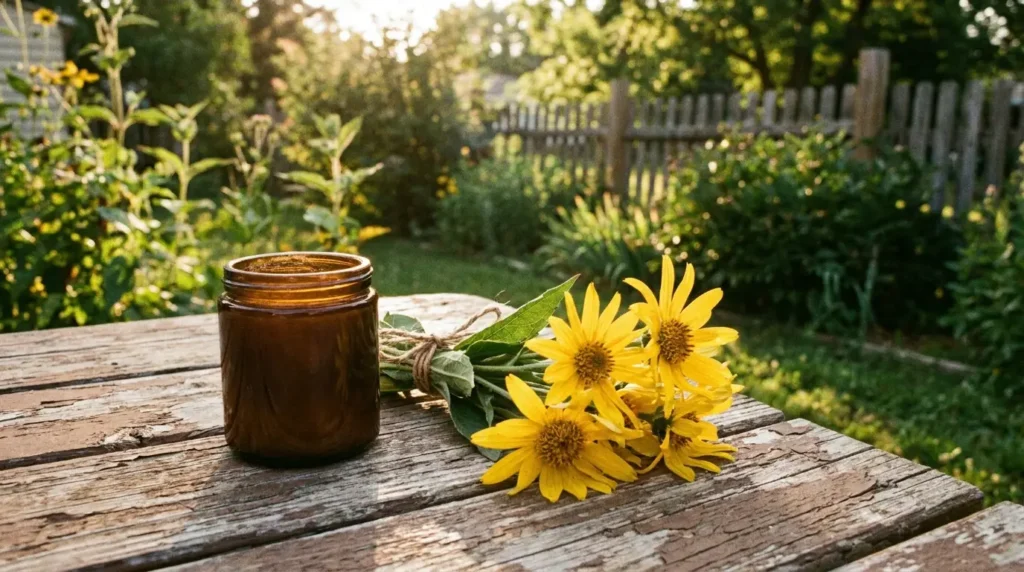
Amateur herbalists sometimes attempt to infuse Arnica flowers in oil or alcohol to create homemade bruise balms. This carries serious dermatological hazards. Crude homemade preparations have unstandardised chemical concentrations; applying them can induce severe contact dermatitis, blistered rashes, and chemical irritation. If applied over tiny unseen cuts, toxic helenalin compounds can enter the bloodstream. To understand how regulated pharmaceutical creams and potentised remedies are safely produced and used, read our dedicated clinical guide on Arnica benefits and uses.
Wear Protective Gardening Gloves
Because Arnica belongs to the Asteraceae family, the plant’s glandular hairs can trigger allergic contact dermatitis in sensitive individuals. Always wear gardening gloves when planting, weeding, dividing, or deadheading Arnica, and wash hands thoroughly afterwards. Keep plants positioned away from grazing pets and young children.
Botanical Conservation, Classical Homeopathy, and Arnica
The journey of Arnica montana from wild mountain pastures into human appreciation is inextricably linked with the development of natural medicine. Historically, European mountain dwellers observed that chamois and mountain sheep sought out Arnica patches to graze upon after suffering falls on steep scree slopes.
In the early 19th century, Dr Samuel Hahnemann systematically proved the plant, codifying it into classical homeopathy. As explored in our introduction to the principles of classical homeopathy, homeopathic remedies do not rely on crude chemical mass. Instead, through the scientific process of serial dilution and succussion (potentisation), the plant’s vibrational curative signature is extracted while completely removing toxic chemical helenalin molecules. This is why manufactured homeopathic pillules (such as 30C or 200C) are exceptionally gentle for internal use, whereas garden plants remain strictly hazardous to swallow.
Today, botanical conservation bodies like Plantlife UK highlight the importance of protecting endangered alpine flora. By learning how to grow Arnica responsibly from cultivated seed in our domestic gardens, UK gardeners help safeguard a plant of immense historical, medicinal, and ecological significance without disrupting fragile wild ecosystems.
Frequently Asked Questions: How to Grow Arnica
Is Arnica easy to grow in the UK?
Arnica has an RHS hardiness rating of H6, meaning it withstands freezing UK winters without difficulty. However, learning how to grow Arnica successfully requires patience: seeds demand cold stratification to break dormancy, and plants will fail if grown in chalky or waterlogged soil.
What soil pH does Arnica need?
Arnica montana requires acidic to slightly neutral soil with a pH between 5.0 and 6.5. It is a calcifuge that cannot tolerate lime. If your soil is naturally alkaline, grow Arnica in containers filled with ericaceous potting mix and grit.
Can I harvest garden-grown Arnica to make homemade remedies?
No. You should never consume home-grown Arnica or prepare homemade tinctures. The crude plant contains helenalin, which is toxic to the heart, liver, and digestive tract. Only regulated pharmaceutical preparations or serially diluted homeopathic remedies are safe for medicinal use.
Why are my Arnica seeds not germinating?
The two most common reasons are lack of cold stratification and burying the seeds too deeply. Arnica seeds require 4 to 6 weeks of chilling at 2–4°C and must be surface-sown because they require light to stimulate germination.
Can Arnica grow in pots and containers?
Yes. Container cultivation is often the best approach in regions with heavy clay or chalky soils. Use a pot with generous drainage holes filled with an ericaceous compost and 25% horticultural grit mix.
When does Arnica flower in the UK?
Arnica typically blooms between June and August in the UK, producing golden-yellow daisy flowers on upright stems 20 to 50 cm tall.
Final Thoughts on How to Grow Arnica
In summary, understanding how to grow Arnica offers a unique window into the resilient beauty of European mountain flora. By respecting its alpine requirements—providing bright sunshine, excellent drainage, lime-free acidic soil, and pre-chilled seeds—you can cultivate vibrant, bee-friendly golden blossoms in UK garden borders, rockeries, and patio containers year after year.
Remember that while Arnica is a treasured botanical in classical health philosophy, garden plants must remain strictly ornamental. Never harvest or ingest home-grown plants, and always rely on registered practitioners for therapeutic health support.
Professional Disclaimer: The horticultural and botanical information in this guide is provided for educational and gardening purposes only. Arnica montana is toxic if consumed in raw, unpotentised form. Do not harvest or swallow garden plants. Always seek medical advice from an NHS GP for physical injuries, and consult an accredited registered homeopath for complementary healthcare guidance.
Book a Holistic Health Consultation in Derbyshire or Online
If you are exploring natural health, managing chronic fatigue, or seeking personalised constitutional wellness, expert clinical support is available.
At Antonios Holistic Therapies, registered practitioner Antonios Mandarakas, RSHom, provides comprehensive, unhurried consultations that examine your health through the lens of classical homeopathy and constitutional balance. We welcome clients in person at our peaceful clinic in Ilkeston, Derbyshire (easily accessible from Nottingham, Derby, and across the East Midlands) and offer secure online video appointments to clients nationwide across the UK.
Discover our range of holistic therapy services, learn more about Antonios Mandarakas, or reserve your clinical consultation today via our secure online booking form.