
Understanding the principles of classical homeopathy begins with exploring a traditional system of complementary healthcare developed in the late 18th and early 19th centuries by the German physician and chemist Samuel Hahnemann. Rather than focusing exclusively on isolated symptom suppression, classical homeopathy approaches health from a whole-person perspective, evaluating an individual’s physical, emotional, and constitutional characteristics.
At Antonios Holistic Therapies, we offer classical homeopathy consultations for clients seeking a thoughtful, individualised complementary approach. Sessions are available in person at our tranquil clinic in Ilkeston, Derbyshire—conveniently situated for clients from Nottingham and Derby—as well as online via secure video consultations for individuals throughout the UK.
What Is Classical Homeopathy?
The foundation of classical homeopathy began with Samuel Hahnemann’s publication of The Organon of the Healing Art in 1810. Disillusioned by the aggressive medical interventions common in his era—such as bloodletting and toxic mercury purges—Hahnemann sought a gentler, systematically observed methodology.
Within classical homeopathic theory, symptoms are viewed not as isolated malfunctions to be eliminated, but as the organism’s outward expressions of an underlying systemic imbalance. The classical approach is defined by several distinguishing features:
- Individualised Assessment: Two people experiencing similar symptoms may receive completely different remedies based on their overall physical constitution, emotional state, and personal triggers.
- The Single Remedy Discipline: Classical practitioners select one remedy at a time to clearly evaluate the individual’s unique response, distinguishing classical practice from combination or complex over-the-counter preparations.
- Supportive Role: Classical homeopathy is practiced as a complementary therapy alongside conventional medicine, with an emphasis on lifestyle, self-awareness, and holistic wellbeing.
The 5 Core Principles of Classical Homeopathy
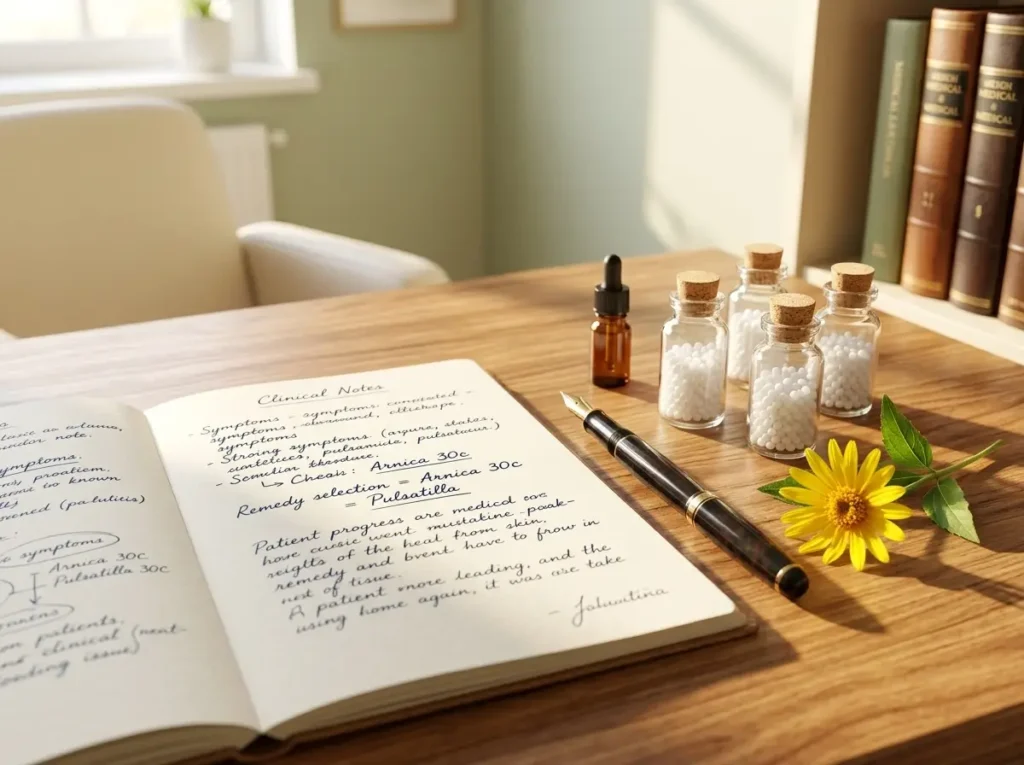
Classical homeopathic practice is traditionally organised around five fundamental principles that guide how practitioners assess symptoms, select remedies, and evaluate progress.
1. The Law of Similars (Similia Similibus Curentur)
The foremost concept of homeopathic doctrine is similia similibus curentur, commonly translated as “like cures like.”
Within homeopathic theory, this principle proposes that a substance capable of producing a specific pattern of symptoms in a healthy person during systematic observations (traditionally called “provings”) may, when prepared in highly diluted form, be selected for an individual experiencing a corresponding symptom pattern.
A Traditional Example: Allium Cepa
A classic historical illustration often cited in homeopathic literature is Allium cepa (derived from the red onion). Peeling a raw onion commonly induces watery eyes, a runny nose, and sneezing. In classical homeopathic practice, Allium cepa is a traditional preparation considered when an individual presents with a similar picture of watery eyes and nasal discharge. It is important to note that this serves as an illustration of homeopathic symptom-matching theory rather than an allopathic treatment for viral colds or seasonal allergies.
2. The Single Remedy (Simile)
A cornerstone of classical homeopathy is the administration of a single remedy at a time.
While modern commercial shelves frequently display complex remedies combining several different ingredients into one tablet, classical homeopathy adheres to the principle that a patient requires only the specific remedy that most closely matches their complete individual picture—termed the simillimum.
Administering one remedy at a time allows both practitioner and client to observe changes clearly, avoiding confusion over which substance contributed to an observed response and maintaining a clear clinical process.
3. The Law of the Minimum Dose

Hahnemann initially experimented with crude herbal and mineral substances, but observed that full-strength doses frequently caused toxic side effects. To address this, he introduced a method of progressive dilution combined with mechanical agitation (vigorous shaking known as succussion)—a process homeopaths refer to as potentisation.
According to homeopathic doctrine:
- Serial dilution was designed to minimize the risk of direct chemical toxicity from crude raw ingredients.
- Homeopathic theory holds that repeated dilution and succussion preserves or enhances the subtle energetic properties of the original substance.
Understanding Homeopathic Dilutions
Many homeopathic preparations are diluted well past Avogadro’s constant ($6.022 \times 10^{23}$), meaning that few or no physical molecules of the original starting substance remain in the final solution or lactose pillule. Because commercial preparations vary in manufacturing methods, concentration, and starting materials, consumers should verify product labeling and consult a healthcare professional regarding suitability.
4. The Totality of Symptoms
In classical homeopathy, a prescription is never based solely on a single complaint or disease label. Instead, the practitioner gathers the totality of symptoms—an exhaustive, multi-dimensional profile that includes:
- Physical Characteristics: Detailed sensations (e.g., sharp, throbbing, dull), specific locations, and physiological habits.
- Modalities: Environmental and circumstantial factors that make symptoms noticeably better or worse (such as heat, cold, fresh air, movement, rest, or time of day).
- Emotional and Mental Outlook: Personal disposition, stress responses, emotional patterns, and temperament.
- General Constitutional Factors: Sleep architecture, dietary appetites or aversions, weather preferences, and energy fluctuations throughout the day.
By synthesizing these subtle, distinctive factors, the homeopath seeks a single remedy whose traditional drug picture closely reflects the individual’s holistic presentation.
5. The Concept of the Vital Force (Dynamis)
In The Organon, Hahnemann posited that living organisms are animated and governed by an immaterial, self-regulating energetic principle he called the Vital Force (Dynamis).
Within this historical model:
- A harmonious Vital Force was considered responsible for maintaining physical vitality and psychological equilibrium.
- Symptoms were interpreted not as the illness itself, but as outward expressions of a disturbed Vital Force attempting to re-establish balance.
- Homeopathic remedies were conceived as gentle stimuli designed to encourage the body’s innate self-regulatory mechanisms.
The concept of the Vital Force represents an important historical and philosophical model within traditional complementary medicine, though it is not recognized as an established physiological mechanism within modern biomedical science.
Hering’s Law of Cure: A Traditional Homeopathic Concept
In classical homeopathic literature, practitioners frequently refer to Hering’s Law of Cure—named after the 19th-century German-American physician Constantine Hering—as an observational framework for understanding how symptoms change over time.
According to this traditional concept, natural recovery is thought to progress along observable pathways:
- From Above Downward: Symptoms may shift from head and upper extremities toward lower limbs.
- From Within Outward: Internal, deeper complaints may transition toward more superficial tissues, such as the skin.
- From More Vital to Less Vital Organs: Progress is observed as balance returns to core functional systems before peripheral areas.
- In Reverse Order of Appearance: More recent complaints may resolve before older, long-standing patterns surface briefly.
Important Safety Note on Symptom Changes:
While homeopathic practitioners use Hering’s observations to contextualize a client’s experiences, new, worsening, or severe symptoms should never be assumed to be a desirable “healing crisis” or evidence of progress. Any severe, persistent, or unexpected health developments must be evaluated promptly by a qualified medical practitioner.
Classical Homeopathy and Modern Evidence
When considering complementary therapies, understanding the distinction between traditional clinical philosophy and modern empirical science is essential for making informed healthcare decisions.
- The Scientific Evidence Base: Major healthcare bodies, including the National Health Service (NHS) and the National Center for Complementary and Integrative Health (NCCIH), state that there is currently no robust, high-quality scientific evidence demonstrating that homeopathic remedies are effective for treating specific clinical conditions.
- Complementary Framework: Classical homeopathy is practiced in the UK as a complementary, supportive modality. It is not intended to replace conventional medical diagnosis, evidence-based treatments, emergency medical interventions, or routine immunisations.
- Professional Standards: In the UK, qualified practitioners frequently align with professional bodies such as the Faculty of Homeopathy (for registered medical and healthcare professionals) or the Society of Homeopaths, ensuring adherence to strict codes of practice and ethical standards.
- Prescription Medications: If you are currently taking prescribed pharmaceutical medication, it should never be discontinued or altered without the direct guidance and supervision of your GP or prescribing physician.
What to Expect During a Classical Homeopathic Consultation
A classical homeopathic consultation differs significantly from a conventional medical visit. It is an unhurried, exploratory conversation focused entirely on your individual life story and constitutional habits.
Initial Consultation (60 to 90 Minutes)
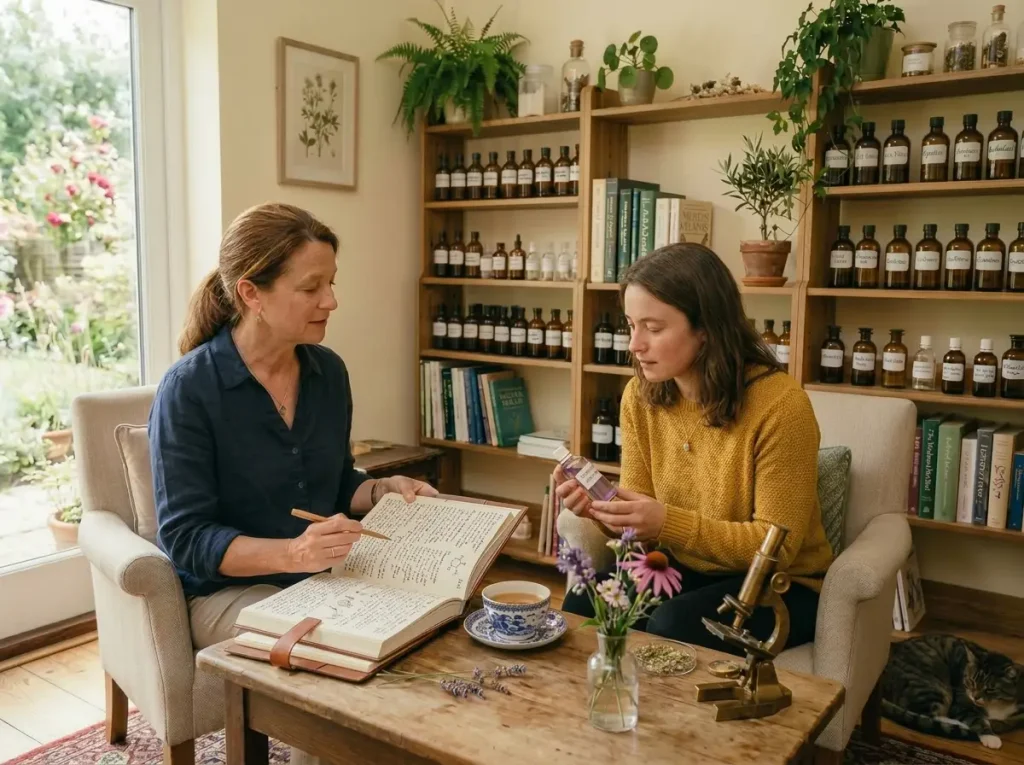
During your first appointment, Antonio takes time to understand your complete health picture. Discussions cover:
- Your primary reasons for seeking holistic support and their daily impact.
- Past personal health history and family constitutional patterns.
- Daily energy cycles, sleep quality, dietary preferences, and sensitivities.
- Emotional wellbeing, stressors, and constitutional temperament.
Remedy Selection & Follow-Up
Following the consultation, Antonio reviews the repertory and materia medica to match your symptom picture with an individualised classical remedy.
Follow-up consultations (typically 45 minutes, scheduled 4 to 6 weeks later) allow for a structured review of your progress, discussing any shifts in wellbeing and determining whether the remedy should be maintained, adjusted, or concluded.
Appointments in Ilkeston & Across the UK
- In-Person Appointments: Conducted at our private clinic in Ilkeston, Derbyshire, easily accessible from Nottingham, Derby, and surrounding East Midlands communities.
- Remote Consultations: Conducted via secure video appointments for clients throughout England, Scotland, Wales, and Northern Ireland.
To learn more about complementary therapies or to explore other whole-person modalities, browse our Natural Health & Wellbeing Articles or explore our work with Bach & Australian Flower Essences and Unani Tibb Consultations.
Ready to discuss your wellbeing? You can explore our full holistic services or book your consultation online today.
Frequently Asked Questions
What is classical homeopathy?
Classical homeopathy is an individualised system of complementary healthcare established by Samuel Hahnemann. It approaches each person as an integrated whole, matching an individual’s complete symptom picture to a single diluted remedy selected in accordance with the Law of Similars.
What does “like cures like” mean?
“Like cures like” (similia similibus curentur) is the foundational concept of homeopathic theory. It proposes that a substance capable of producing a specific set of symptoms in a healthy person may, when prepared in highly diluted homeopathic form, be chosen for an individual experiencing a corresponding pattern of symptoms.
What is the principle of the minimum dose?
The minimum dose principle states that homeopathic remedies should be administered in the smallest possible dilution necessary to stimulate a response. Hahnemann introduced this method through serial dilution and succussion (shaking) to minimize chemical toxicity while exploring dynamic energetic properties.
Why do classical homeopaths only recommend one remedy at a time?
Classical practice relies on the single remedy (simile) principle to assess an individual’s response with precision. Giving multiple remedies simultaneously obscures which preparation was responsible for any observed changes and departs from classical methodology.
What is meant by the “totality of symptoms”?
The totality of symptoms refers to the comprehensive collection of an individual’s physical, emotional, environmental, and constitutional factors. Rather than prescribing for an isolated diagnosis, the homeopath uses this complete overview to identify an individualised remedy.
What is the Vital Force in homeopathic philosophy?
The Vital Force (Dynamis) is a historical theoretical concept proposed by Hahnemann to describe the innate, self-regulating energy that animates the living body. In homeopathic theory, illness represents a disharmony of this vital principle, and remedies serve as subtle prompts to encourage natural internal equilibrium. It is a traditional philosophical model rather than a biomedical concept.
What is Hering’s Law of Cure?
Hering’s Law of Cure is a traditional clinical observation framework within homeopathy that describes patterns often noted during recovery—such as symptoms resolving from top to bottom, from within outward, and in reverse chronological order. It is an interpretative tool within homeopathic practice rather than an established medical law.
Is classical homeopathy supported by scientific evidence?
Authoritative medical organizations, such as the UK NHS and the US NCCIH, state that there is no consistent, high-quality scientific evidence demonstrating that homeopathic remedies are effective clinical treatments for specific diseases. Homeopathy should be understood as a traditional complementary practice rather than a replacement for conventional medical diagnosis and evidence-based treatments.
Can homeopathic remedies be taken alongside prescription medications?
Highly diluted homeopathic remedies are not generally expected to interact chemically with pharmaceutical drugs. However, commercial homeopathic products can vary in ingredients, dilution, and quality. If you are taking prescription medications, always inform your GP, pharmacist, and holistic practitioner. You must never discontinue or alter prescribed medications without medical advice.
Are homeopathic remedies suitable for children and during pregnancy?
While many homeopathic products are prepared in extreme dilutions, suitability depends on the specific formulation, carrier substances (such as alcohol or lactose), and individual health history. Women who are pregnant or breastfeeding, as well as parents considering complementary options for children, should consult their GP or midwife before using any new health product.