Unani Tibb is a comprehensive traditional system of holistic healthcare with historical roots tracing back to classical Greek medicine (Hippocrates and Galen), which was later refined and expanded by pioneering scholars across Arabic, Persian, and South Asian traditions—most notably Ibn Sina (Avicenna). Rather than viewing people through a standardized lens, Unani Tibb places primary importance on individual constitution, lifestyle, environment, diet, and emotional state.
Central to this historical philosophy are the core concepts of Mizaj (temperament) and the four temperaments: Damawi, Balghami, Safrawi, and Saudawi. Understanding these principles provides an enlightening framework for self-awareness and holistic living.
At Antonios Holistic Therapies, we guide clients in Ilkeston, Derbyshire, and across the UK in exploring these time-honoured principles. Consultations are offered both in person at our Ilkeston clinic and online throughout the UK.
What Is Unani Tibb?
The word Unani means “Ionian” (Greek), reflecting the tradition’s origins, while Tibb is the Arabic word for medicine or the healing arts. Over centuries of scholarly exchange and clinical observation, Unani Tibb evolved into a sophisticated discipline centered on working with the body’s innate wisdom rather than imposing aggressive interventions.
The World Health Organization (WHO) benchmarks for Unani medicine detail the principles, historical development, and quality-assurance considerations that define this traditional practice across the world.
The Guiding Principles: Mizaj and Tabiat
To appreciate how Unani Tibb approaches wellbeing, two foundational concepts must be understood:
- Mizaj (Individual Temperament): In Unani philosophy, every person is born with a unique constitutional baseline (Mizaj). This reflects the natural balance of fundamental qualities within their physiological and emotional makeup. Living in harmony with your natural Mizaj supports vitality, while sustained habits that oppose it can create internal disharmony.
- Tabiat (The Innate Healing Power): Unani Tibb teaches that the human body possesses an innate, self-regulating intelligence called Tabiat (akin to the Hippocratic concept of vis medicatrix naturae). The practitioner’s role is never to override the body, but to support Tabiat through gentle lifestyle adjustments, dietary guidance, and restful routines so the body can maintain its natural equilibrium.
The Four Fundamental Qualities
Before examining the temperaments themselves, it is essential to explore the foundation upon which they rest: the Four Qualities:
- Hot (Hararat)
- Cold (Burudat)
- Moist (Rutubat)
- Dry (Yubusat)
Within the traditional theoretical framework, these qualities are not literal clinical measurements (such as body temperature recorded on a medical thermometer). Instead, they represent qualitative patterns observed in nature, seasons, foods, stages of life, and human constitutions:
- Heat is traditionally associated with energy, mobility, expansion, and metabolic vigor.
- Cold relates to calm, stillness, slowing of movement, and preservation.
- Moisture represents adaptability, lubrication, flexibility, and fluid balance.
- Dryness denotes structure, firmness, restraint, and consistency.
Every individual constitution exhibits a natural combination of two primary qualities: one primary thermal quality (Hot or Cold) and one moisture quality (Moist or Dry).
The Four Temperaments in Unani Tibb
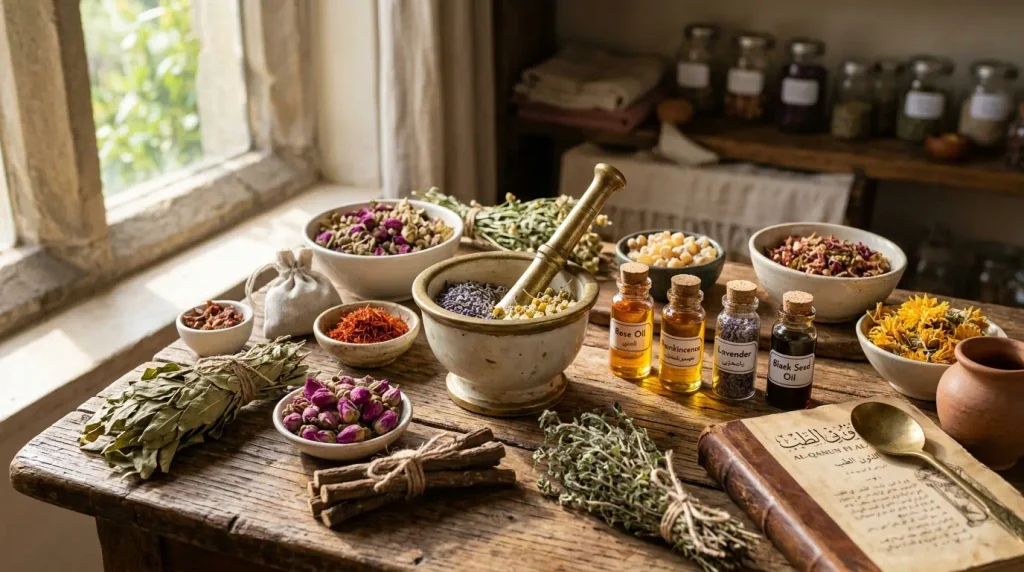
In traditional Unani pathology and physiology, the interaction of the four qualities gives rise to four primary bodily fluids or humours (Akhlat): Dam (Blood), Balgham (Phlegm), Safra (Yellow Bile), and Sauda (Black Bile).
When one humour and its qualities naturally predominate in an individual, it shapes their classical temperament. The WHO standard terminology in Unani medicine recognises these four traditional classifications:
| Temperament | Classical Equivalent | Primary Humour (Akhlat) | Traditional Qualities |
|---|---|---|---|
| Damawi | Sanguine | Blood (Dam) | Hot & Moist (Warm & Moist) |
| Balghami | Phlegmatic | Phlegm (Balgham) | Cold & Moist (Cool & Moist) |
| Safrawi | Choleric | Yellow Bile (Safra) | Hot & Dry (Warm & Dry) |
| Saudawi | Melancholic | Black Bile (Sauda) | Cold & Dry (Cool & Dry) |
1. Damawi: The Sanguine Temperament
- Primary Humour: Blood (Dam)
- Traditional Qualities: Hot and Moist (Warm & Moist)
Traditional Characteristics and Morphological Tendencies
Individuals with a predominantly Damawi constitution are traditionally described as cheerful, expressive, sociable, and enthusiastic. In classical texts, they are often identified with a robust physical build, good muscular tone, warm extremities, and a steady, full pulse. Their digestion is generally robust with a healthy appetite.
Classical Balance & Lifestyle Considerations
- Beneficial Factors: Moderate exercise, fresh seasonal greens, hydration, and cooling, light foods such as barley, cucumbers, and pomegranate.
- Aggravating Factors: Excessive consumption of heavy red meats, rich sugary foods, extreme humidity, and unvented sedentary routines.
2. Balghami: The Phlegmatic Temperament
- Primary Humour: Phlegm (Balgham)
- Traditional Qualities: Cold and Moist (Cool & Moist)
Traditional Characteristics and Morphological Tendencies
A Balghami temperament is characterized by calmness, patience, resilience, and a peaceful disposition. Morphologically, individuals often have softer features, a tendency toward fluid retention or a heavier frame, cooler skin, and a deliberate, slower pulse. Digestion tends to be slower and steady.
Classical Balance & Lifestyle Considerations
- Beneficial Factors: Warming spices (ginger, cinnamon, black pepper), dry and warm environments, stimulating physical exercise, and light, cooked meals.
- Aggravating Factors: Sedentary habits, damp and chilly climates, excessive cold dairy products, iced drinks, and daytime oversleeping.
3. Safrawi: The Choleric Temperament
- Primary Humour: Yellow Bile (Safra)
- Traditional Qualities: Hot and Dry (Warm & Dry)
Traditional Characteristics and Morphological Tendencies
Safrawi individuals are typically recognized for high drive, sharp intellect, determination, and intense focus. Physically, they often present with a leaner, angular frame, prominent veins, warm and dry skin, and a rapid, bounding pulse. Their digestive fire (Hazm) is sharp and quick, occasionally leading to irritability if meals are delayed.
Classical Balance & Lifestyle Considerations
- Beneficial Factors: Cooling, hydrating foods (watermelon, mint, courgettes, leafy greens), quiet meditative environments, shaded nature walks, and proper hydration.
- Aggravating Factors: Pungent, heavily spiced or deep-fried foods, prolonged heat exposure, intense competitive stress, and skipped meals.
4. Saudawi: The Melancholic Temperament
- Primary Humour: Black Bile (Sauda)
- Traditional Qualities: Cold and Dry (Cool & Dry)
Traditional Characteristics and Morphological Tendencies
The Saudawi temperament is associated with deep thoughtfulness, meticulous attention to detail, creativity, and introspection. Morphologically, people with this constitution tend to have a slender, delicate frame, dry skin, sensitive digestion, and a relatively deep or wiry pulse. They may require longer periods of peaceful retreat to recharge mentally.
Classical Balance & Lifestyle Considerations
- Beneficial Factors: Nourishing, warming, unctuous foods (stews, olive oil, sweet almonds, root vegetables), warm baths, regular gentle sleep schedules, and relaxing creative activities.
- Aggravating Factors: Cold, windy, dry weather, erratic schedules, irregular fasting, excessive mental overexertion, and dry or overly preserved foods.
Temperament and Individuality in Traditional Practice
One of the greatest gifts of the Unani Tibb tradition is its avoidance of “one-size-fits-all” prescriptions. Rather than judging one temperament as superior to another, the system views each configuration as a natural variation of human constitution.
In classical assessment, an individual rarely represents a singular pure temperament; rather, most people have a dominant quality alongside a secondary influence. A practitioner of traditional modalities considers an individual’s personal story, daily habits, emotional stressors, and environmental influences to support the innate restorative action of Tabiat.
Important Perspective on Traditional Concepts & Modern Medicine:
The four temperaments, four qualities, and humoral concepts described on this page belong to a historical system of philosophical medicine. They are not intended as modern medical diagnoses, nor should they be used to self-treat disease. Unani Tibb principles serve as an educational and lifestyle framework that complements—and never replaces—conventional medical care from your GP or qualified healthcare provider.
Integrating Unani Principles into Holistic Care
At Antonios Holistic Therapies, understanding constitutional individuality underpins how we approach wellness. While Unani Tibb offers a theoretical framework for lifestyle balance, many clients find deep synergy when pairing constitutional awareness with other gentle, complementary modalities:
- Classical Homeopathy: Much like Unani Tibb, homeopathy evaluates the complete individual rather than isolated symptoms, selecting individualised remedies that stimulate internal balance.
- Bach & Australian Flower Essences: These gentle remedies provide emotional harmony, supporting the mental quietude essential for calming an over-stimulated Safrawi or grounding a thoughtful Saudawi constitution.
- Detox Foot Spa Therapy: A deeply relaxing foot treatment that encourages calm, quiet downtime, and foot comfort—particularly soothing for constitutions prone to stagnation or chill.
To explore more educational articles on natural health, herbal traditions, and holistic living, browse our Natural Health & Wellbeing Articles.
Unani Tibb Consultations in Ilkeston and Across the UK
Whether you are seeking greater constitutional self-awareness or wish to introduce traditional lifestyle guidance into your wellbeing routine, personal consultations are designed around your specific circumstances.
- In-Person Consultations: Hosted at our serene clinic in Ilkeston, Derbyshire, serving clients from Nottingham, Derby, and the wider East Midlands.
- Online Consultations: Available for individuals across the UK via secure video appointments.
During a consultation, we explore your daily routines, sleep patterns, dietary preferences, and energy flow within the traditional framework of the four temperaments, helping you cultivate habits that support your vitality.
Ready to begin? You can explore our full holistic services or book a consultation today.
Frequently Asked Questions
What is Unani Tibb?
Unani Tibb is a classical tradition of holistic wellbeing with Greco-Arabic origins, refined across centuries in the Middle East and South Asia. It approaches wellbeing through understanding an individual’s constitution (Mizaj), lifestyle, environment, and natural balance of qualities.
What are the four temperaments in Unani Tibb?
The four traditional temperaments are:
- Damawi (Sanguine: Warm & Moist)
- Balghami (Phlegmatic: Cool & Moist)
- Safrawi (Choleric: Hot & Dry)
- Saudawi (Melancholic: Cool & Dry)
What do “Mizaj” and “Tabiat” mean?
- Mizaj refers to your unique personal temperament or constitutional balance.
- Tabiat represents the body’s innate self-healing wisdom and homeostatic capacity, which traditional therapies aim to nurture and support.
Is Unani Tibb a form of modern medical diagnosis?
No. Unani Tibb is a traditional philosophical and lifestyle system. It does not provide medical diagnoses, clinical prognoses, or cures for diseases. Anyone experiencing symptoms or managing a medical condition should consult their GP or a registered medical professional.
Can I book a consultation outside of Derbyshire?
Yes. In addition to in-person sessions at our clinic in Ilkeston, Derbyshire, Antonios Holistic Therapies offers online video consultations to clients throughout England, Scotland, Wales, and Northern Ireland.